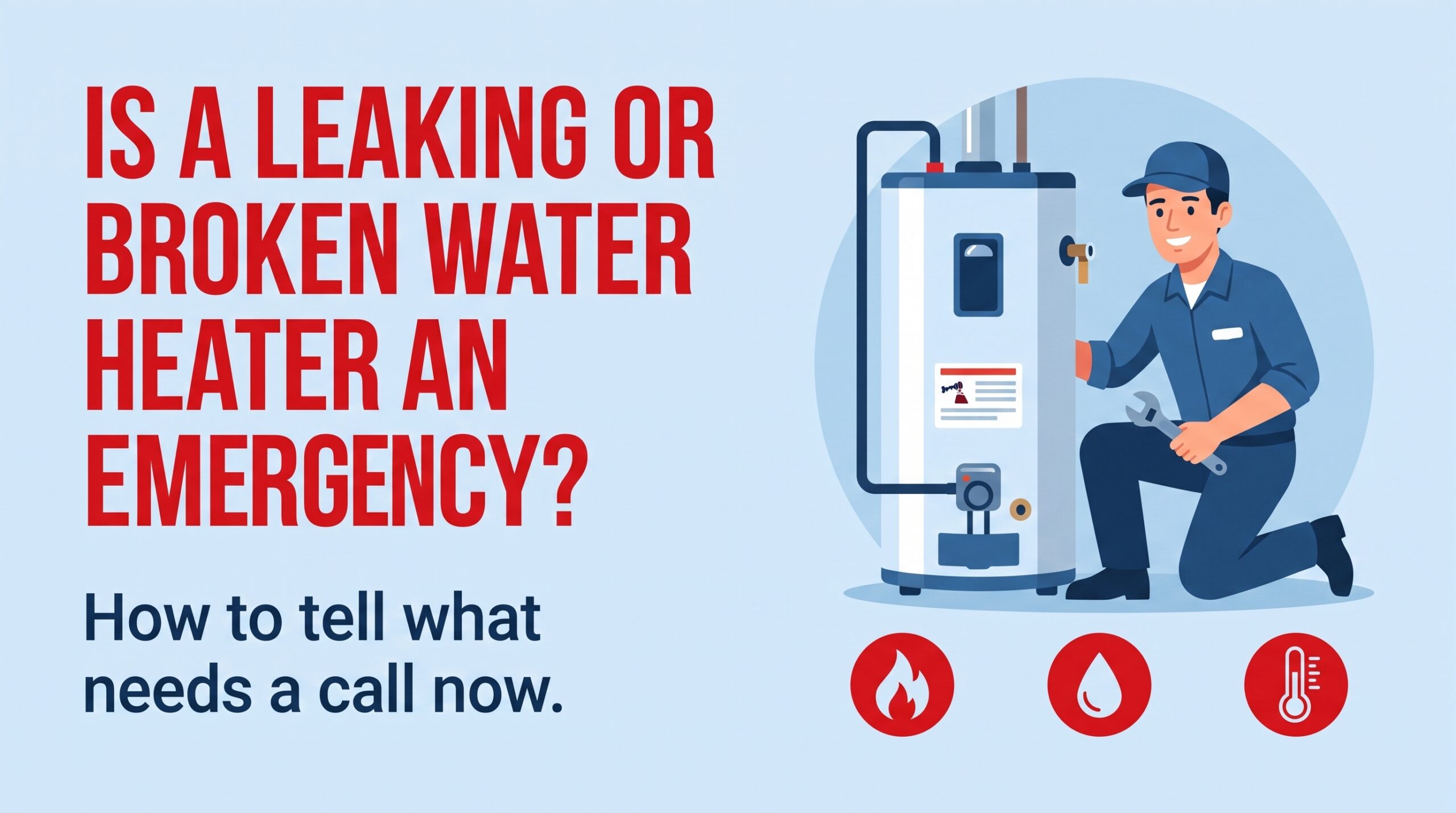
Short answer: it depends on what the water heater is doing. A water heater emergency is anything actively flooding your home, anything involving gas or a burning smell, or anything scalding. Those need a call right now. A slow drip, lukewarm water, or a rumbling tank still needs a tech — but it can usually wait until morning.
CALL RIGHT NOW IF
You smell gas or rotten eggs · water is pouring out and you can’t stop it · the tank is bulging · water is scalding · you see scorch marks or soot
IT CAN USUALLY WAIT
A slow drip you can catch in a bucket · no hot water but nothing leaking · popping or rumbling · hot water runs out early · an error code with no water present
Water heater emergency or can it wait? Quick answer
Gas smell — the one true emergency
Rotten eggs, sulfur, or hissing near the heater
Natural gas is odorless, so utilities add a sulfur scent so you can smell a leak. If you smell rotten eggs near a gas water heater, do not investigate it. Leave the house, leave the door open, and call your gas utility from outside. Do not flip light switches, unplug anything, or use your phone indoors — a spark is all it takes.
Black streaks above the burner door or around the vent mean the unit is not burning cleanly and may be spilling combustion gases into the room. That is a carbon monoxide risk. Shut the gas off at the valve and call us.
Carbon monoxide is colorless and odorless. Dizziness, headaches, or nausea that improve when you leave the house are warning signs. Get everyone outside and call 911, then have the heater inspected before it runs again.
Water pouring out
A burst tank or failed connection
When the steel tank finally goes, it does not drip — it empties. A 50-gallon tank puts 50 gallons on your floor, and the supply line keeps feeding it. Shut the cold-water valve on the pipe entering the top of the tank, then call us. This one is not repairable; the heater is done.
Flexible connectors and nipples corrode where copper meets steel. A blown fitting sprays under full house pressure. Shut off the cold-water supply valve first, then the water heater, then call.
A tank that looks swollen is under pressure it was not built to hold, usually from a failed T&P valve or thermostat. Keep everyone away from it and call us immediately.
A slow drip or small puddle
Annoying, not an emergency — but it is a countdown
Water weeping from the shell means the glass lining has failed and the steel is rusting through from the inside. There is no patch for this. It will not stop on its own, and it usually gets worse quickly, so book a replacement before it becomes the flood above.
The temperature and pressure relief valve is a safety device doing its job. An occasional drip can mean high pressure or a temperature set too high; a constant one means the valve is failing. Never cap or plug the discharge pipe — that is the one thing standing between a bad thermostat and a burst tank.
The plastic drain valve at the base is often just loose or has debris in the seat. It is the cheapest leak on the list, but it still needs a tech to seat or swap it properly.
No hot water at all
Uncomfortable, rarely dangerous
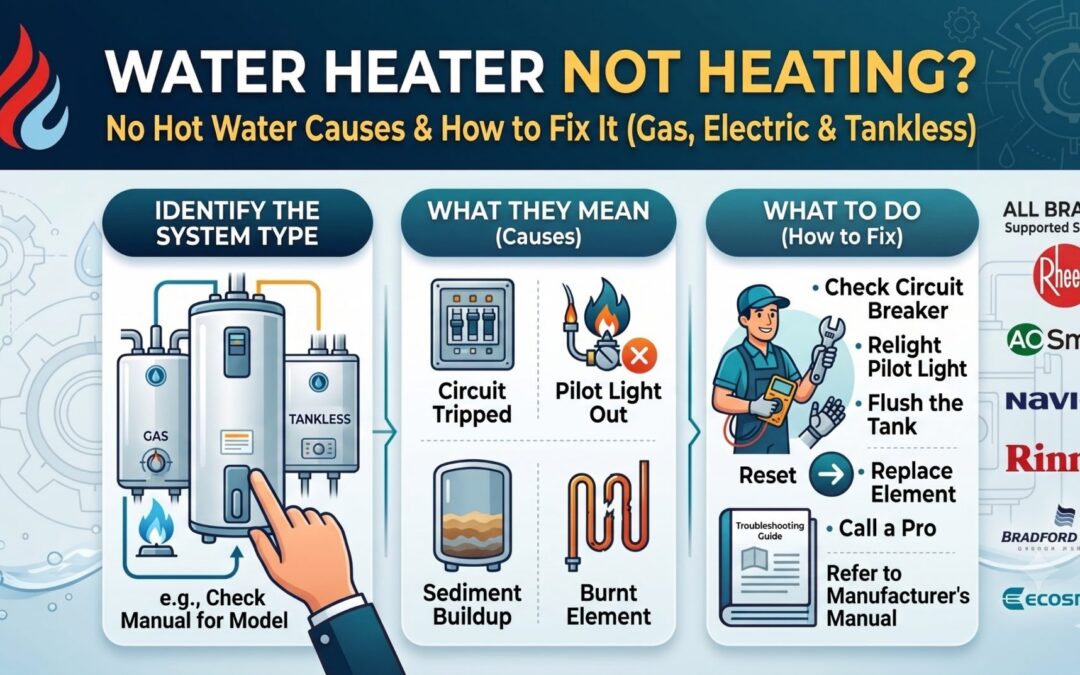
A pilot that will not stay lit usually points at a failing thermocouple or a dirty pilot assembly. If it lights and drops out repeatedly, stop relighting it and book a tech — repeated relighting attempts on a unit with a real fault are how small problems become gas problems.
Most often a tripped high-limit switch or a burned-out heating element. If the breaker keeps tripping, leave it off and call — a breaker that trips repeatedly is telling you about a short, not a nuisance.
Tankless units self-diagnose. Note the code before you reset anything — our water heater error code guide covers every major brand. Full detail on this one lives in water heater not heating.
Scalding water
A burn risk, and a sign something failed open
Water at 140°F scalds an adult in about five seconds; at 150°F it takes roughly a second and a half, and children burn faster still. If your taps are running dangerously hot, a thermostat has failed or been set too high. Turn the heater off and call — a runaway thermostat also builds pressure the tank was not designed to hold.
The T&P valve venting steam means the tank is at its limit. Stay away from the discharge pipe, shut the unit down if you can do it safely, and call us right away.
Rust, cracks and discolored water
Usually terminal, rarely urgent
If only the hot side is discolored, the sacrificial anode rod is spent and the tank has started to corrode. Caught early this is a cheap part; left alone it becomes a leak.
Surface rust around the top fittings is common and manageable. Rust streaking down the shell from a seam means the tank is failing from the inside out.
A crack in the shell or a weeping seam means the tank is compromised. It will not hold pressure indefinitely. Get it replaced before it lets go.
Popping, rumbling and crackling
Sediment, and the damage it causes
Minerals settle to the bottom of the tank and water boils underneath the layer, which makes the popping you hear. It is not dangerous by itself, but the sediment insulates the burner from the water, overheats the steel, and is one of the most common reasons tanks fail early.
Scale building up directly on the heating elements. It costs efficiency first and the element second.
Usually pipes expanding and contracting as hot water moves through them. Worth mentioning at your next service visit, not worth an emergency call.
How to shut your water heater down safely
Stop the water: turn the cold-water supply valve on the pipe entering the top of the tank clockwise until it stops. That alone ends most floods. Then stop the heat: on a gas unit, turn the gas control knob to OFF — not PILOT. On an electric unit, switch off its breaker at the panel. If you smell gas at any point, skip all of this, get outside, and call your gas utility from there.
Not sure if it can wait until morning?
Tell us what you are seeing and we will tell you straight — whether it needs a truck tonight or a slot tomorrow.
Get Same-Day Help →Repair or replace after an emergency
What the call usually ends in
Anything that leaked from the tank shell is a replacement — the steel is gone and there is no repair for it. Almost everything else is a part: thermostats, elements, thermocouples, gas valves and T&P valves are all routine same-day fixes.
Age decides the close calls. Once a tank passes eight to twelve years, putting a few hundred dollars into it rarely pays off. See what a replacement actually costs and the 10 signs it is time to replace before you decide.
If the emergency was a leak, where the water is coming from tells you which of the two you are looking at.
Common questions
Straight answers to what people ask us most
Is a leaking water heater an emergency?
Only if you cannot control the water. Water pouring out of the tank or a blown connection is an emergency — shut the cold-water supply valve and call. A slow drip you can catch in a bucket is not an emergency, but it does mean the tank is failing and should be replaced soon.
Is a broken water heater an emergency?
If it is only broken in the sense that you have no hot water, no. It is uncomfortable, not dangerous, and it can wait for a normal appointment. It becomes an emergency the moment gas, flooding, or scalding water is involved.
Should I turn off my water heater if it is leaking?
Yes. Turn off the cold-water supply valve at the top of the tank first, then shut off the gas at the control knob or the breaker for an electric unit. That stops the leak from feeding and takes the heat out of the equation until a tech arrives.
Can a water heater explode?
It is rare, but it is the reason the T&P valve exists. Tanks fail violently only when both the thermostat and that relief valve fail together and pressure has nowhere to go. Never cap the discharge pipe, and treat a bulging tank or a valve venting steam as a call-now situation.
How long can I leave a leaking water heater?
Longer than you want to. A weeping tank does not reseal, and the rate usually accelerates as corrosion opens the hole. Most people who wait a week end up paying for floor or drywall repair on top of the heater.
Do you offer emergency water heater repair?
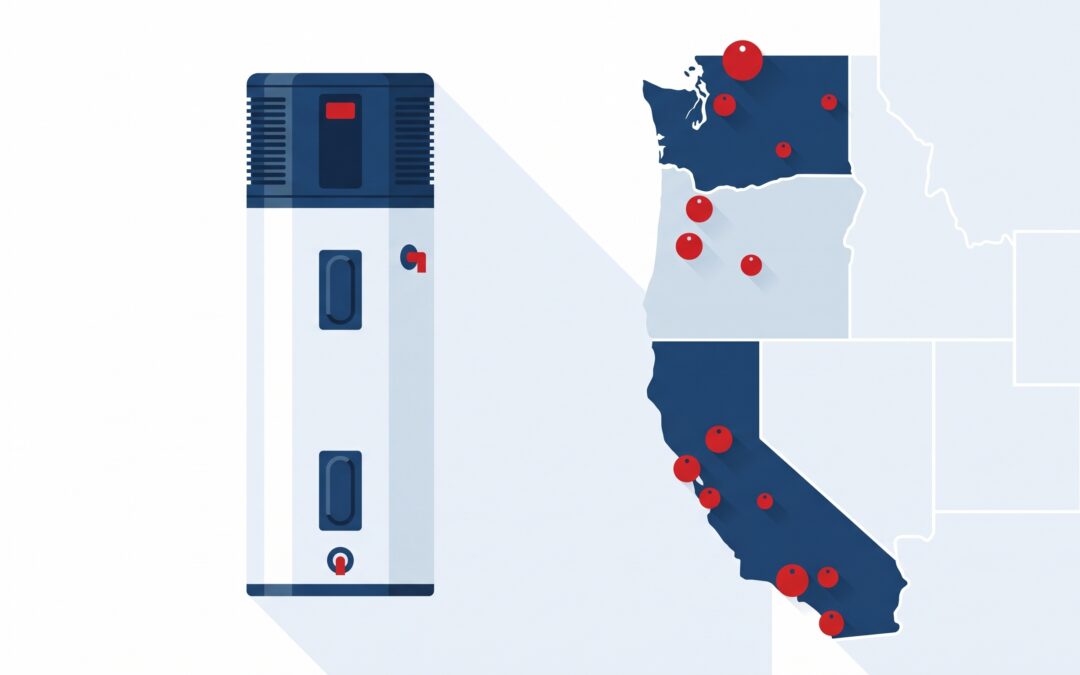
Yes — we run same-day service across Oregon, Washington and California, and we carry the common failure parts on the truck so most repairs finish on the first visit.
Water heater emergency? Let’s get it handled.
Licensed, permitted techs with the common parts already on the truck. Serving homeowners across Oregon, Washington and California.
Schedule Same-Day Repair →